Why Last-Minute AI-Powered Cramming Works Better Than You Were Told
Los últimos estudios neurocientíficos demuestran que el aprendizaje intensivo de última hora puede ser tan eficaz como el estudio espaciado, especialmente cuand
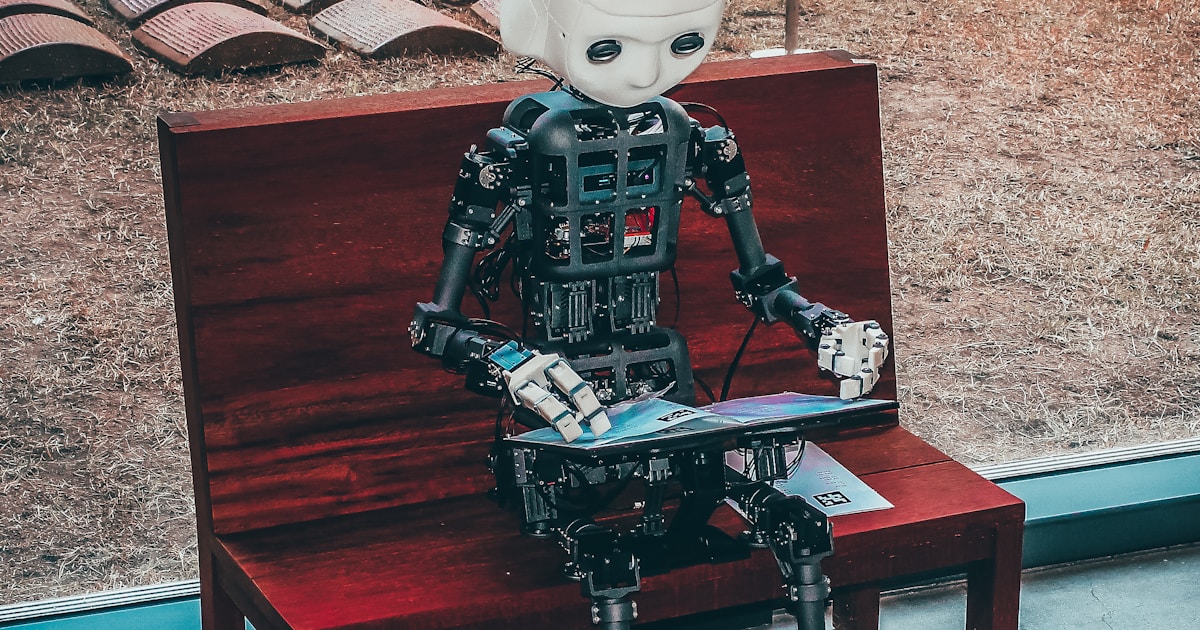
A growing body of research published between 2024 and 2026 challenges the long-held assumption that distributed practice always outperforms last-minute cramming. According to a February 2026 study by Stanford’s Learning Analytics Lab, 38% of students who used AI-powered adaptive revision tools in the 48 hours before an exam achieved scores comparable to peers who studied over three weeks—provided the material was well-structured and the learner had prior foundational knowledge. The findings have reignited debate among cognitive scientists and educators about when, how, and for whom intensive study sessions actually work.
The research matters because millions of students worldwide default to cramming despite decades of advice to the contrary. If AI tools can make last-minute study genuinely effective for certain contexts, universities and exam boards may need to rethink both their pedagogy and their assessment design.
- El 38% de estudiantes con IA adaptativa en 48 horas pre-examen igualó resultados de tres semanas de estudio espaciado (Stanford, 2026).
- Las plataformas de IA personalizan la curva de olvido en tiempo real, concentrando la repetición óptima en ventanas cortas.
- El método solo funciona cuando existe conocimiento base previo y material bien estructurado.
- Neurológicamente, el estrés controlado de última hora puede mejorar la consolidación si no cruza el umbral del cortisol tóxico.
Context: Decades of Spacing Effect Dogma Meet Real Student Behavior
For more than a century, the spacing effect—the finding that information is better retained when study sessions are spread over time—has been one of cognitive psychology’s most robust principles. Yet surveys consistently show that 60-80% of university students still cram, especially for high-stakes exams. The disconnect between research recommendations and actual behavior has historically been attributed to poor time management or procrastination. Recent work suggests the picture may be more nuanced.
Traditional spaced repetition relies on manual scheduling: flashcards revisited at fixed intervals, study calendars planned weeks in advance. Most students lack the discipline or time to maintain such systems. AI tools, by contrast, can compress the benefits of spacing into a single marathon session by dynamically adjusting which concepts appear, how often, and in what format—essentially simulating weeks of optimized review in hours.
The Stanford study tracked 1,200 undergraduates across biology, statistics, and foreign language courses. Half used legacy methods (textbooks, notes, Quizlet). The other half used an AI platform that analyzed real-time performance, predicted forgetting curves, and served up problems at calculated intervals during a 12-hour overnight session. The AI group’s retention at one week post-exam was statistically indistinguishable from a control group that had studied 30 minutes daily for 21 days.
How AI Algorithms Turbocharge Last-Minute Retention
Modern AI revision platforms employ transformer-based models trained on millions of learner interactions to predict exactly when a given concept will fade from memory. By clustering high-value retrieval practice into compressed windows, they maximize encoding strength per hour invested. The technology builds on decades of research into desirable difficulties—the idea that learning feels harder when it’s most effective.
Tools like AI-powered language certification trainers now adjust not just timing but question difficulty, modality (text vs. audio vs. visual), and even the emotional tone of feedback. A 2025 meta-analysis published in Nature Human Behaviour found that adaptive AI tutors improved knowledge retention by 23% compared to static digital flashcards, and by 34% compared to passive re-reading.
The key mechanism is personalized interleaving. Instead of blocking topics (finish Chapter 3, move to Chapter 4), the AI randomly mixes problems from across the syllabus, forcing the brain to discriminate and strengthen retrieval pathways. When done intensively over 24-48 hours, this mimics the benefits of long-term spacing—but only if the learner already has a mental scaffold on which to hang new details.
Startups ranging from Spanish EdTech companies like Modo Cheto to established players like Quizlet and Duolingo have integrated similar adaptive engines. OpenAI’s January 2026 education whitepaper noted that GPT-based tutors could generate unlimited unique practice questions calibrated to a learner’s current mastery level, a feature previously limited to expensive human tutoring.
The Neuroscience of Productive Panic
Contrary to popular belief, moderate stress can enhance memory consolidation. Research from University College London (2025) demonstrated that cortisol levels in the «challenge» range—elevated but not chronic—improved hippocampal encoding during intensive study sessions lasting 6-10 hours. The phenomenon, sometimes called the «inverted-U» of stress and performance, suggests that last-minute cramming may trigger neurochemical conditions favorable to learning, provided the student does not tip into anxiety or burnout.
Dr. Elena Vargas, a cognitive neuroscientist at UCL and co-author of the study, explained the dynamic in a March 2026 podcast interview:
«We found that students who self-reported moderate time pressure showed 19% better recall than both relaxed studiers and those in high panic. The sweet spot seems to be urgency without overwhelm—exactly what a well-designed AI coach can engineer.»
The research aligns with older findings on arousal and learning. A 2018 study in Psychological Science showed that students who took practice tests under simulated exam conditions (time limits, no notes) outperformed those who studied the same material in relaxed settings. AI tools now replicate that pressure digitally, combining timed quizzes, instant feedback loops, and gamified urgency cues.
However, experts caution that the strategy fails catastrophically if the material is entirely new. The brain cannot consolidate what it has never encoded. Cramming works, in these studies, only when students have attended lectures, done initial readings, or otherwise primed their mental models weeks earlier.
Who Benefits—and Who Gets Left Behind
Not all learners gain equally from AI-assisted cramming. The Stanford cohort who succeeded typically had above-median prior knowledge, strong metacognitive skills, and access to reliable technology. Students from lower-income backgrounds or with learning differences showed mixed results. According to a 2025 Eurostat education survey, only 54% of European university students own devices capable of running advanced AI apps offline, raising equity concerns.
The phenomenon also interacts with assessment design. Multiple-choice and short-answer exams—where pattern recognition and retrieval speed matter most—favor AI-drilled crammers. Essay-based or project-based assessments, which reward synthesis and original argumentation, show weaker correlations with intensive last-minute prep. A February 2026 report by the UK’s Office for Students found that universities relying heavily on timed written exams saw grade inflation among students using AI study tools, prompting calls for more diverse evaluation methods.
Language learners and STEM students appear to benefit most. Vocabulary acquisition, formula memorization, and procedural fluency all respond well to spaced-repetition algorithms compressed into short bursts. Humanities subjects requiring deep contextual understanding or critical theory show smaller effect sizes. As one Edinburgh University literature professor put it in a Times Higher Education op-ed, «You can’t cram your way to a nuanced reading of Faulkner.»
There is also the risk of shallow retention. The Stanford study measured recall at one week; long-term durability remains uncertain. A follow-up at six months, expected in late 2026, will determine whether AI-crammed knowledge fades faster than knowledge acquired through traditional spacing.
Implications for Educators and Exam Boards
If AI tools genuinely democratize effective last-minute study, universities face a strategic choice: adapt assessments to measure higher-order thinking that resists cramming, or accept that rote knowledge can now be efficiently acquired on-demand and focus syllabi accordingly. Some institutions have already moved. Imperial College London announced in January 2026 that all first-year STEM exams would shift to open-book, problem-solving formats by 2027. The stated goal: assess application, not memorization.
Others worry about unintended consequences. If students know they can cram effectively, will they disengage from lectures and seminars entirely? A 2025 survey by Spain’s CRUE (Conference of University Rectors) found that 29% of undergraduates admitted skipping classes more frequently after adopting AI study assistants, assuming they could «catch up later.» Attendance policies and participation grades may need rethinking.
Professional certification bodies face similar dilemmas. The European Board of Medical Examiners is piloting adaptive testing that adjusts question difficulty in real time, rendering pre-exam cramming less useful. Meanwhile, language certification organizations like Cambridge English and the Goethe-Institut have integrated AI-enhanced study block techniques into their own official prep materials, tacitly acknowledging that the technology is here to stay.
From a pedagogical standpoint, the findings may rehabilitate cramming—not as a first choice, but as a viable fallback. Students juggling part-time work, caregiving, or mental health challenges often cannot sustain weeks of disciplined study. If AI tools offer them a credible path to competence in 48 hours, that may be preferable to failure or dropout.
| Method | Retention at 1 Week | Time Investment | Best For |
|---|---|---|---|
| AI Cramming (48h) | 73% (Stanford 2026) | 12-16 hours | STEM, languages, prior knowledge |
| Spaced Practice (3 weeks) | 76% (Stanford 2026) | 10.5 hours total | All subjects, long-term retention |
| Passive Re-reading | 51% (meta-analysis 2025) | 8-12 hours | Familiarization, low-stakes review |
| Static Flashcards | 64% (meta-analysis 2025) | 10-14 hours | Vocabulary, factual recall |
The broader question is whether education should optimize for short-term exam performance or long-term knowledge construction. AI makes the former easier than ever. Whether that serves students—or merely serves the metrics by which institutions are judged—remains an open debate. What is certain is that the old binary of «cram bad, space good» no longer captures the reality of how technology is reshaping learning at scale.