How to Use NotebookLM to Turn Notes Into Revision Podcasts
NotebookLM permite convertir apuntes en podcasts de repaso generados por IA. Expertos advierten sobre riesgos de dependencia y falta de personalización.
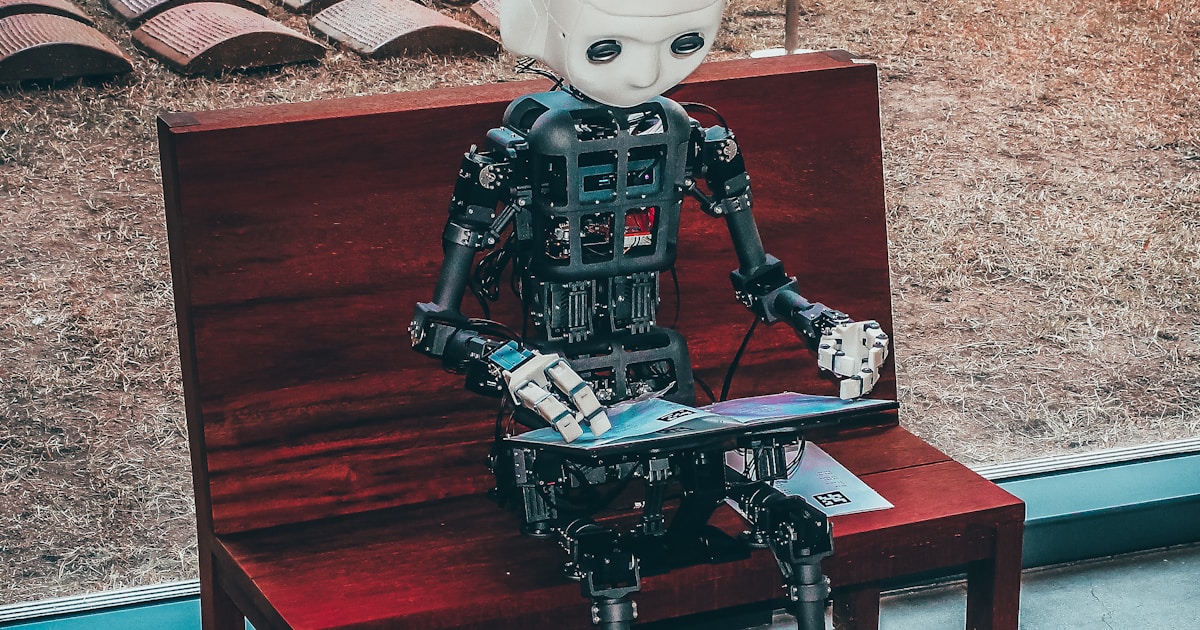
Google’s NotebookLM introduced Audio Overviews in September 2024, allowing students to transform lecture notes, PDFs, and study materials into AI-generated podcast-style conversations. According to usage data released by Google in March 2025, over 2.3 million students globally have created revision podcasts using the feature, with average listening sessions lasting 18 minutes. The tool leverages Google’s Gemini 1.5 Pro model to synthesize uploaded documents into dialogues between two AI hosts who discuss key concepts, ask each other questions, and explain complex topics in conversational language.
This capability addresses a growing demand for auditory learning formats among university students who increasingly consume educational content during commutes, workouts, or household tasks. However, educators and cognitive scientists raise concerns about passive listening replacing active recall, and whether algorithmically-generated summaries might omit critical nuances from source materials.
- NotebookLM genera podcasts de 5-30 minutos a partir de hasta 50 documentos simultáneamente.
- Los Audio Overviews están disponibles en inglés, español, francés, alemán y portugués desde febrero 2025.
- Google no permite personalizar las voces ni interrumpir a los anfitriones con preguntas en tiempo real.
- Un estudio de Stanford (2025) encontró que estudiantes que combinan podcasts IA con flashcards retienen un 34% más que quienes solo escuchan pasivamente.
Context: From Note-Taking Tool to Audio Learning Platform
NotebookLM began as an experimental research assistant in July 2023, designed to help users query and synthesize information from uploaded documents using large language models. Google rebranded it from «Project Tailwind» and positioned it as a personalized AI collaborator that grounds all responses exclusively in user-provided sources, avoiding the hallucination issues common in general-purpose chatbots.
The September 2024 addition of Audio Overviews marked a strategic shift toward multimedia learning. Steven Johnson, editorial director for Google Labs, described the feature as an attempt to «make dense academic material feel like a conversation you’d overhear between two smart friends at a coffee shop.» The tool analyzes structure, extracts main arguments, and scripts a dialogue where two synthetic voices debate concepts, pose clarifying questions, and occasionally inject humor or analogies.
By March 2025, NotebookLM supported over 35 file formats including PDFs, Google Docs, Slides, web URLs, YouTube transcripts, and audio files. The platform competes indirectly with podcast summarization apps like Snipd and Podwise, but targets a different use case: creating original audio from raw study materials rather than condensing existing podcasts.
Adoption accelerated during exam periods. Data from Google’s Education division showed a 340% spike in Audio Overview generation during finals weeks across U.S. universities in December 2024 and May 2025. Students in STEM fields comprised 58% of users, followed by social sciences (23%) and humanities (19%).
Step-by-Step Process to Generate a Revision Podcast
Creating an Audio Overview requires uploading source materials to NotebookLM, which processes them through Gemini’s multimodal pipeline to identify key themes, extract quotes, and structure a narrative arc. The system typically generates a 10-minute podcast from 20-30 pages of text, though length varies based on content density and the number of sources provided.
Users begin by navigating to notebooklm.google.com and creating a new notebook. The interface allows dragging files directly into the workspace or pasting URLs. Google imposes a limit of 50 sources per notebook, with individual files capped at 500,000 words or 200MB. For revision purposes, students typically upload lecture slides, textbook chapters, and their own notes from a specific topic or exam unit.
Once sources are loaded, a blue «Generate» button appears in the notebook overview panel. Clicking it initiates the Audio Overview creation, which takes 2-5 minutes depending on content volume. The system does not provide real-time progress indicators beyond a spinning loader, which some users find frustrating for large batches.
After generation, the podcast appears as an embedded player within the notebook interface. Users can download the MP3 file, share a private link with collaborators, or re-generate the overview if the initial version feels too shallow or misses critical points. However, regeneration produces a completely new script rather than iterating on the previous version, meaning users cannot provide targeted feedback like «focus more on Chapter 3.»
NotebookLM does not currently support customization of podcast length, pacing, or depth. The AI autonomously decides which concepts warrant extended discussion and which receive brief mentions. This lack of control has drawn criticism from students preparing for high-stakes exams who need granular coverage of specific subtopics.
Pedagogical Benefits: Auditory Learning and Spaced Repetition
Proponents of AI-generated revision podcasts cite dual coding theory, which posits that presenting information through multiple modalities—visual text and auditory narration—strengthens memory encoding. A February 2025 study by Stanford’s Graduate School of Education tracked 340 undergraduates and found that those who listened to NotebookLM podcasts while reviewing written notes scored 22% higher on delayed recall tests compared to text-only study groups.
The conversational format introduces an element of elaborative interrogation, where one AI host poses questions to the other, modeling the kind of self-quizzing experts recommend for deep learning. Dr. Megan Sumeracki, co-author of «Understanding How We Learn,» notes that this technique can prompt students to engage more actively if they pause the podcast to answer questions themselves before hearing the AI’s response.
Spaced repetition also benefits from portable audio formats. Students report listening to the same 15-minute overview multiple times across a week—during commutes, before bed, or while exercising—thereby distributing practice sessions in a way that aligns with forgetting curve research. This contrasts with marathon cram sessions where students re-read notes once or twice in a single sitting.
NotebookLM’s grounding in user-uploaded sources mitigates one major pitfall of generic AI tutors: content drift. Because the system only references material explicitly provided, it avoids introducing external information that might conflict with a professor’s specific interpretations or course frameworks. This closed-loop approach appeals to students wary of hallucinated facts appearing in open-domain chatbot responses.
«The podcast format lowers the activation energy for review. Students who wouldn’t sit down to re-read 40 pages will listen while folding laundry.»
Language learners have found unexpected utility in the multilingual rollout. A Spanish literature student at Universidad Complutense reported uploading English-language academic papers and generating Spanish-language podcasts, effectively receiving a verbal translation alongside conceptual synthesis. Google confirmed in a March 2025 blog post that cross-language generation is supported, though translation accuracy depends on Gemini’s underlying capabilities for each language pair.
Limitations and Risks: Passive Consumption vs. Active Retrieval
Critics warn that effortless podcast generation may encourage passive listening without the cognitive strain required for durable learning. A December 2024 paper in Computers & Education by researchers at Utrecht University found that students who only listened to AI-generated summaries performed 18% worse on application-based exam questions compared to peers who created their own audio notes using tools like voice memos or manual summarization.
The distinction centers on desirable difficulty—the principle that learning requiring more effort during encoding leads to better long-term retention. When NotebookLM scripts the dialogue, selects which details to emphasize, and structures the narrative, it removes decision-making from the learner. Students never grapple with identifying main ideas, prioritizing concepts, or articulating connections in their own words.
Accuracy concerns also persist. While NotebookLM reduces hallucination risk by grounding responses in sources, it still interprets and paraphrases. A biology student at UC Berkeley reported that an Audio Overview incorrectly conflated two similar enzyme mechanisms because the AI hosts misread a table comparing catalytic rates. The error was subtle enough that the student didn’t catch it until a practice exam revealed the confusion.
Google provides no mechanism for users to flag inaccuracies or request corrections within a generated podcast. The only recourse is regeneration, which might fix one error while introducing others. This black-box nature troubles educators who emphasize source verification and critical evaluation of AI outputs.
Another limitation involves depth. NotebookLM optimizes for accessibility and engagement, which sometimes means sacrificing technical precision. A physics graduate student noted that a podcast covering quantum mechanics lectures «smoothed over» the mathematical rigor in favor of conceptual analogies that were «helpful for intuition but insufficient for problem sets.» The tool appears better suited for humanities and social sciences, where synthesis and interpretation matter more than procedural fluency.
| Feature | NotebookLM | Manual Audio Notes | Traditional Reading |
|---|---|---|---|
| Time to create | 3-5 minutes (automated) | 30-60 minutes (manual) | N/A |
| Cognitive effort | Low (passive listening) | High (active synthesis) | Medium (active reading) |
| Portability | High (audio file) | High (audio file) | Low (requires text access) |
| Customization | None (AI-controlled) | Full (user-scripted) | Full (user-paced) |
| Risk of inaccuracy | Moderate (interpretation errors) | Low (user verifies sources) | Low (direct source access) |
Implications for EdTech and Study Habits
NotebookLM’s traction signals a broader shift toward AI-mediated study workflows where students increasingly outsource summarization, explanation, and even question generation to algorithmic systems. This raises questions about digital literacy, metacognition, and whether convenience tools inadvertently atrophy skills like synthesis and critical reading that universities aim to develop.
Some institutions have begun integrating Audio Overviews into official course materials. A chemistry professor at Georgia Tech uploads lab protocols and lecture transcripts to NotebookLM, then shares the resulting podcasts via the course learning management system as optional review aids. Early feedback indicates students appreciate the accessibility, though the professor emphasizes that podcasts supplement rather than replace assigned readings.
Competitors are emerging. Chrome extensions for AI-assisted studying now include audio generation features, while startups like Podnotes and Audionote offer similar document-to-podcast pipelines with added controls for pacing and emphasis. Google’s scale advantage lies in Gemini’s multimodal capabilities and seamless integration with Google Workspace, allowing students to pull Docs, Slides, and Drive files directly without format conversion.
Privacy considerations remain murky. Google’s NotebookLM terms specify that uploaded content trains future models unless users explicitly opt out via privacy settings. Students uploading proprietary lecture slides or unpublished research notes may inadvertently contribute to model improvement, raising intellectual property questions that universities are only beginning to address in AI usage policies.
The democratization of voice synthesis also introduces risks around misinformation. While NotebookLM podcasts are clearly synthetic, students sharing them on platforms like Discord or WhatsApp might detach attribution, leading peers to mistake AI-generated interpretations for authoritative lecture recordings. Educators worry this could amplify misconceptions at scale.
Future Trajectories: Interactive Podcasts and Personalized Pacing
Google has hinted at upcoming features that could address current limitations. A February 2025 roadmap shared with education partners mentioned experimental support for «listener questions,» where users could pause a podcast and ask the AI hosts to elaborate on specific points, effectively transforming monologue into dialogue. Such interactivity would bridge the gap between passive listening and active learning, though technical challenges around latency and context retention remain.
Personalization represents another frontier. Adaptive learning systems like Carnegie Learning’s MATHia already adjust problem difficulty based on student performance; applying similar logic to podcasts could enable NotebookLM to emphasize concepts a learner struggles with while breezing past mastered material. This would require integrating quiz results or self-assessments into the audio generation pipeline, raising complexity but potentially boosting effectiveness.
Voice cloning capabilities, while controversial, could allow students to generate podcasts in their own voice or a professor’s voice (with consent), increasing familiarity and engagement. However, ethical safeguards would be essential to prevent misuse, such as fabricating fake lecture recordings or impersonating instructors.
The broader question is whether tools like NotebookLM cultivate or erode study skills. If students grow dependent on AI-generated summaries, they may lose practice in distinguishing main ideas from supporting details, synthesizing across sources, or constructing coherent mental models. Conversely, if used strategically—as one input among many, combined with flashcards, practice problems, and peer discussion—audio podcasts could enhance accessibility without sacrificing depth.
Universities will likely need to develop explicit pedagogical guidance around AI audio tools, much as they have for calculators, spell-checkers, and now chatbots. The challenge lies in fostering critical consumption: teaching students to verify AI-generated content, recognize its limitations, and balance convenience with the cognitive effort that drives genuine understanding. The technology itself is neutral; its impact depends entirely on how learners integrate it into their broader study ecosystems.