90% of College Papers Use AI: How to Use It Without Risking Your Grade
Nine in ten students now use AI in college papers. Data from HEPI and Turnitin shows where the academic risk sits — and how to stay within the rules.
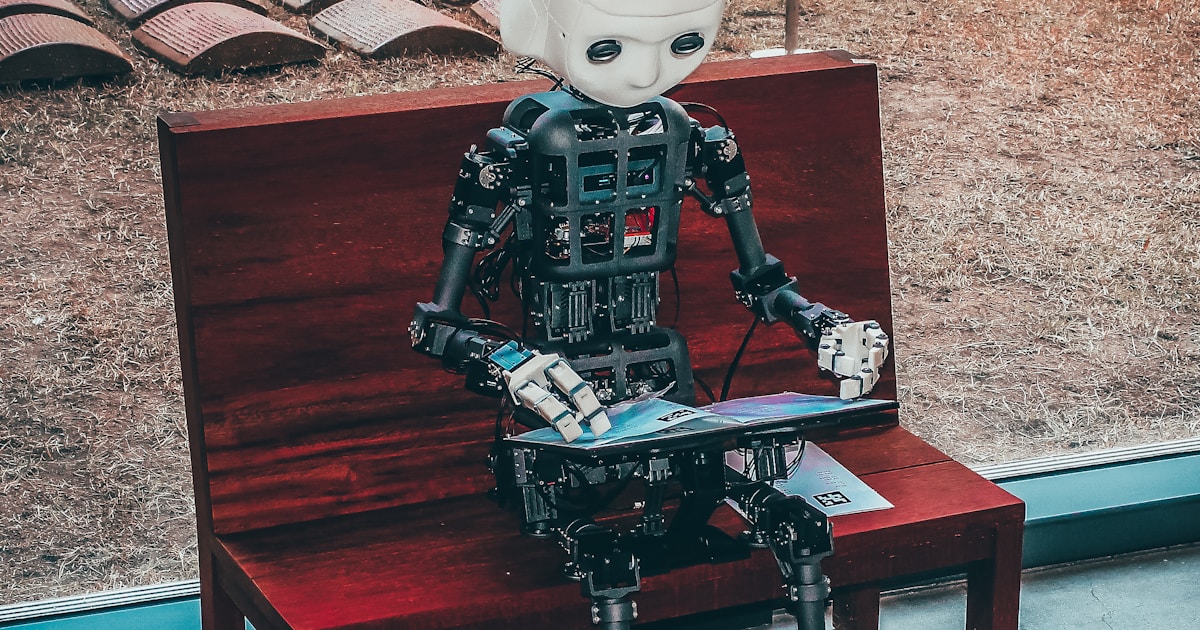
As the new academic year opens, generative AI sits inside almost every piece of university coursework. According to the Higher Education Policy Institute (HEPI), 92% of UK undergraduates used generative AI in their studies in 2025, up from 66% a year earlier. US surveys point the same way. Universities, meanwhile, still disagree on where legitimate use of AI in college papers ends and academic misconduct begins.
That gap is the story. Students are rarely penalised for using AI as such; they are penalised for using it in ways their institution never authorised, or for being unable to show how a paper was produced. Knowing the rules — and the detection tools that enforce them — now matters as much as knowing the syllabus.
- HEPI’s 2025 Student Generative AI Survey found that 92% of UK undergraduates use generative AI, up from 66% in 2024.
- Turnitin reported in 2024 that around 11% of more than 200 million reviewed papers contained at least 20% AI-written text.
- Stanford research published in 2023 found that AI detectors misclassified 61% of essays by non-native English writers as machine-generated.
- Most universities now regulate how AI is used rather than banning it, which shifts the risk from the tool to the student’s documentation.
How AI in College Papers Became the Norm
According to HEPI (2025), 92% of UK undergraduates now use generative AI in their studies, up from 66% in 2024. The Digital Education Council (2024) found a similar global pattern, with 86% of students reporting AI use. Adoption has moved considerably faster than most university policies.
The shift took less than three academic years. When ChatGPT launched in November 2022, several school systems — including New York City’s — banned it outright. Most reversed course within months. By 2024, generative features were embedded in Microsoft Word, Google Docs and Grammarly, tools students were already required to use.
The consumer study market accelerated the trend. Flashcard and tutoring apps — from Quizlet and Khan Academy’s Khanmigo to Spanish startups such as Modo Cheto — added generative features, normalising AI as ordinary study equipment rather than a separate, suspect tool.
Josh Freeman, author of the HEPI survey, has argued publicly that universities should assume any assessment that can be completed by generative AI eventually will be, and should redesign assessment accordingly. The data suggests students reached that conclusion first.
What AI Detectors Actually Flag — and What They Miss
According to Turnitin (2024), of more than 200 million papers reviewed since April 2023, roughly 11% contained at least 20% AI-written text and about 3% were mostly AI-generated. Detection tools remain probabilistic, however, and researchers have repeatedly documented false positives.
Detection is the weakest link in the enforcement chain. A 2023 Stanford study published in the journal Patterns found that widely used GPT detectors misclassified 61% of essays written by non-native English speakers as AI-generated. Simple, formulaic prose — the kind produced by careful second-language writers — resembles machine output statistically.
Even the companies building the models have conceded the limits. OpenAI withdrew its own detection tool in mid-2023:
«As of July 20, 2023, the AI classifier is no longer available due to its low rate of accuracy.»
The practical consequence cuts both ways. Students cannot rely on detectors missing AI text, and universities cannot rely on detectors proving it. Misconduct cases increasingly turn on secondary evidence: version history, drafting notes, and whether a student can explain their own argument. Fabricated citations remain the most common giveaway, which is one reason only 10% of students fact-check AI output — a figure that alarms integrity offices more than the AI use itself.
Where Universities Draw the Line
University rules on AI vary widely. The UK’s Russell Group published shared principles in 2023 committing its members to AI literacy rather than blanket bans, while most US institutions delegate the decision to individual instructors. The same drafting behaviour can be legitimate in one course and misconduct in the next.
That fragmentation is deliberate. A computer science department may require students to use AI assistants; a first-year writing seminar may prohibit them entirely, because the assessed skill is the writing itself. Policies therefore attach to the assignment, not the institution.
Across published policies, a rough consensus on risk has emerged:
| Use of AI | Typical policy status (2025) | Risk to grade |
|---|---|---|
| Brainstorming topics and structuring ideas | Broadly permitted | Low |
| Grammar, clarity and style editing | Permitted, often with disclosure | Low to moderate |
| Summarising sources or lecture notes | Varies by course | Moderate |
| Generating paragraphs submitted as one’s own | Prohibited without explicit authorisation | High |
| Submitting a fully AI-written paper | Treated as academic misconduct | Severe |
Notably, the panic about an epidemic of cheating has not materialised in the data. Research by Denise Pope and Victor Lee at Stanford (2023) found that self-reported cheating rates among students remained flat — in the 60% to 70% range they had occupied for years — after ChatGPT’s release. AI changed the method more than the prevalence.
What the New Rules Mean for Students
According to Pew Research Center (2025), 26% of US teenagers used ChatGPT for schoolwork in 2024, double the share of 2023. For the cohort now entering university, the approach documented by academic integrity offices combines three habits: reading the policy per course, disclosing AI use, and preserving drafting evidence.
The first habit is the least glamorous and the most protective. Because rules attach to assignments, the syllabus and the assignment brief override any campus-wide statement. When neither specifies a position on AI, integrity officers consistently advise asking the instructor in writing before submission.
The second is disclosure. A growing number of universities provide standard wording for acknowledging AI assistance, similar to citing a source. Undisclosed use of a permitted tool has itself become a sanctionable offence at some institutions — a category of violation that did not exist three years ago.
The third is evidence. Version history in Google Docs or Word, saved prompts and dated notes reconstruct a writing process when a detector raises a flag. Combined with verification of every claim and citation the model produces — a step where students remain strikingly negligent — the record usually settles a dispute before it becomes a hearing.
For universities, the implication is harder. If AI in college papers is effectively universal and detection is unreliable, enforcement built on catching text after submission looks increasingly untenable. The pressure moves upstream, to assessment design.
The Question the Data Leaves Open
The unresolved issue is not whether students will keep using AI in college papers — every survey says they will — but whether the take-home essay survives as evidence of learning. Several institutions are already piloting oral defences, supervised writing sessions and process-based grading. If those models spread, the detection debate may end not because the detectors improved, but because the paper stopped being the thing that gets graded.